

By interweaving nucleic acid scientists with clinicians dedicated to finding new cures, our goal is to create a new paradigm for organizing molecular research that enables the rapid application of new biological discoveries to solutions for unmet challenges in human health.
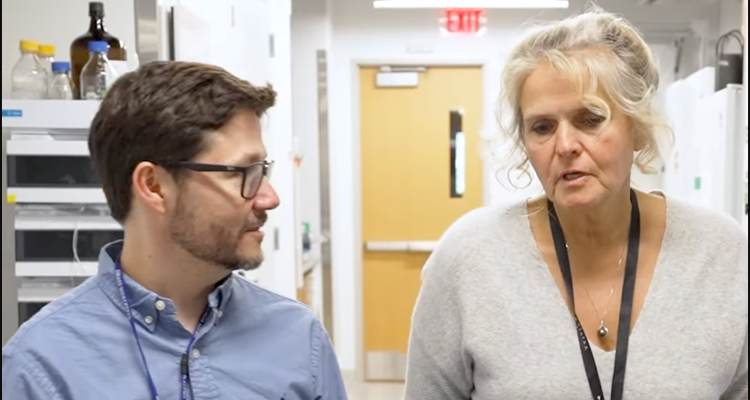
At UMass Chan, researchers are advancing therapeutic RNA to better understand and treat disease at its source. Led by Neil Aronin, Jon Watts, and Anastasia Khvorova, teams here at the RTI and the Nucleic Acid Chemistry Center are combining deep biological insight with advanced oligonucleotide chemistry to move RNA‑based approaches from discovery toward real clinical potential. 🎥 Watch how RNA science is helping shape the future of medicine»
Save the dates for our 8th annual RNA Therapeutics Symposium, June 24–26, 2026!
In person registration is now sold out; virtual registration is still available!
Abstract submission is now closed.

ScienceLIVE is an educational science outreach program for Worcester area middle schools. We provide opportunities for students to engage with our diverse postdoctoral and graduate student trainees through interactive, exciting virtual and hands-on STEM activities.

The 2025 Else Kröner Fresenius Prize for Medical Research goes to RNA researcher Anastasia Khvorova, PhD of the RNA Therapeutics Institute at UMass Chan Medical School. The Else Kröner Fresenius Foundation is awarding the 2.5 million euro prize in recognition of Khvorova's pioneering work in the field of RNA-based therapies. Her research has contributed significantly to the development of new approaches for treating genetic and neurodegenerative diseases.

Erik Sontheimer, PhD, the Pillar Chair in Biomedical Research and professor of RNA therapeutics; Jonathan Watts, PhD, professor of RNA therapeutics; and Scot Wolfe, PhD, professor of molecular, cell & cancer biology, were awarded $2.3 million in new funding from the Rett Syndrome Research Trust to utilize base-editing and prime-editing technologies to correct mutations in MECP2.
Current treatments for Rett syndrome symptoms are palliative, but gene therapy clinical trials aimed at addressing the disease’s underlying causes are underway.
“I am cautiously optimistic there’s a good chance that these gene therapy approaches are going to be successful at making some difference. The editing approaches we’re working on have the chance to change disease outcomes even more profoundly, and perhaps enable patients to get much closer to normalcy, especially if the disease can be caught earlier,” Dr. Watts said.
Worcester, known as the “Heart of the Commonwealth” is located in Central Massachusetts



